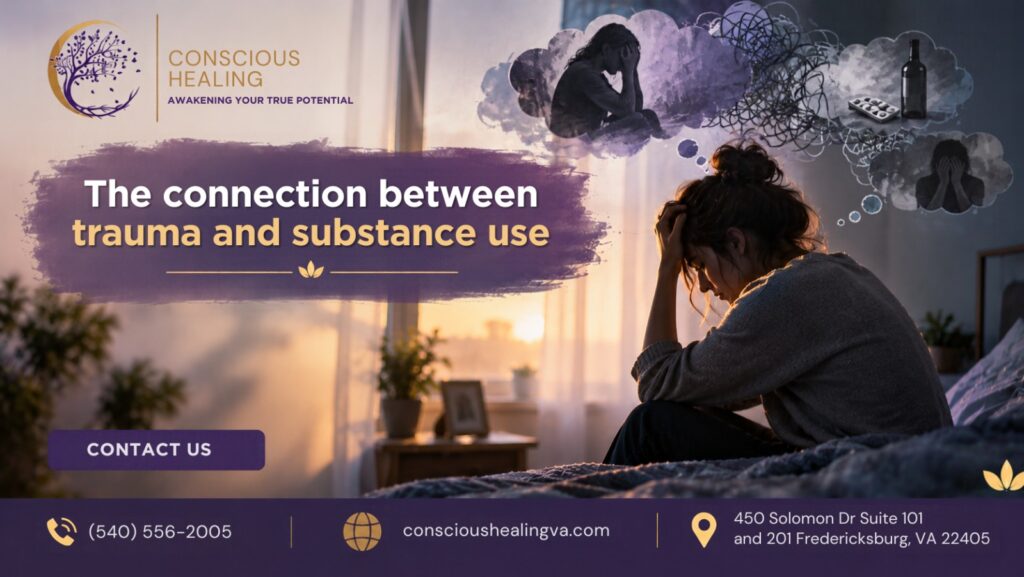
A person may turn to alcohol or drugs because they want relief from something difficult to live with memories that interrupt their day, a constant feeling of being unsafe, or emotions they struggle to manage. Family members may see the substance use without knowing what happens before it, or what their loved one is trying to quiet.
Understanding that connection can help treatment address both the substance use and the distress surrounding it. At Conscious Healing in Fredericksburg, Virginia, our trauma-first approach gives attention to how a person’s experiences may affect their recovery, while helping them build the skills and support to respond differently.
How trauma can affect everyday life
Trauma can follow an event, repeated experiences, or circumstances that a person experiences as harmful or threatening. Its effects may continue after the immediate danger has passed, influencing emotional well-being, relationships, and daily functioning. People respond differently, and not everyone develops lasting difficulties.
Some people experience post-traumatic stress disorder, or PTSD. Others have trauma-related concerns without meeting the criteria for that diagnosis. Experiencing trauma and having PTSD are not the same thing.
Difficulties may include:
- Feeling constantly alert or easily startled.
- Avoiding people, places, or conversations connected to an experience.
- Struggling with sleep or unwanted memories.
- Feeling emotionally disconnected or finding it difficult to trust.
These experiences deserve professional attention when they persist or interfere with daily life. They cannot, on their own, explain why someone uses substances or establish a diagnosis.
Why substances may feel like a way to cope
Alcohol or drugs may seem to offer temporary distance from distress. Someone might drink to fall asleep, use to avoid painful feelings, or rely on substances to feel comfortable around other people.
The National Center for PTSD explains that substance use and PTSD frequently occur together. It also cautions that using alcohol or drugs can worsen PTSD symptoms. Alcohol, for example, may make someone feel sleepy while making their sleep less restful.
This can become a difficult cycle: distress prompts substance use, short-term relief reinforces it, and the consequences create further distress. Relationship problems, missed responsibilities, and concerns about using can add to what the person is already managing.
Understanding this pattern helps explain why “just stop” may be an inadequate response. The person needs help addressing substance use and developing safer ways to manage what they are experiencing.
Trauma does not explain every addiction
Trauma can contribute to vulnerability, but it is one part of a larger picture. Inherited characteristics, mental health concerns, social circumstances, and stress can also influence substance use disorders.
Not everyone who experiences trauma develops addiction, and not everyone with addiction has a trauma history. Treatment should explore the individual’s experience without assuming that a particular explanation applies.
It is also possible for substance use and traumatic experiences to overlap in different ways over time. A careful assessment helps a clinician understand the person’s history, current symptoms, substance use, and immediate needs.
What this connection means for treatment
When trauma-related difficulties and substance use occur together, both deserve attention. The National Center for PTSD reports that people with PTSD and substance use disorders can benefit from evidence-based treatment for both conditions; having one should not automatically prevent treatment for the other.
Depending on individual needs, care may involve:
- Assessing safety and medical needs, including whether withdrawal management or another level of care is needed.
- Understanding triggers, including reminders, emotions, and situations associated with the urge to use.
- Practicing coping skills, such as grounding, emotional regulation, and seeking support.
- Providing appropriate clinical treatment, which may include trauma-focused therapy and medication when indicated.
- Planning for daily life, including relationships, routines, and continuing recovery support.
At Conscious Healing, “trauma-first” describes the importance we give to understanding these connections. It does not mean everyone must begin by recounting painful experiences, or that trauma work comes before necessary medical care. Our approach brings that understanding into substance use treatment, emotional regulation, relapse prevention, and recovery planning.
Treatment decisions should reflect clinical assessment, the person’s preferences, and their circumstances. Coping skills can be valuable, while some people also need specialized treatment for PTSD.
How families can offer support
Learning about trauma may help families respond with greater understanding. That does not require diagnosing a loved one, asking them to explain painful experiences, or accepting behavior that causes harm.
A helpful starting point is to describe concerns calmly, listen without pressing for details, and encourage professional support. Clear boundaries can sit alongside compassion. Family members also deserve support with their own questions and well-being.
Getting help with both concerns
You do not need to know exactly how trauma and substance use are connected in your life before asking for help. An assessment can help clarify what is happening and which treatment options may be appropriate.
If you or someone you love is struggling, connect with Conscious Healing to discuss trauma-first substance use treatment in Fredericksburg, Virginia, and a next step toward recovery.
Take the First Step Toward Healing and Lasting Recovery
Sources
This article provides general information and does not replace an individual assessment or professional medical advice.